
Powering Jobs and Growth: Key Takeaways from Transforming Transportation 2026
By the World Bank and WRI Ross Center for Sustainable Cities
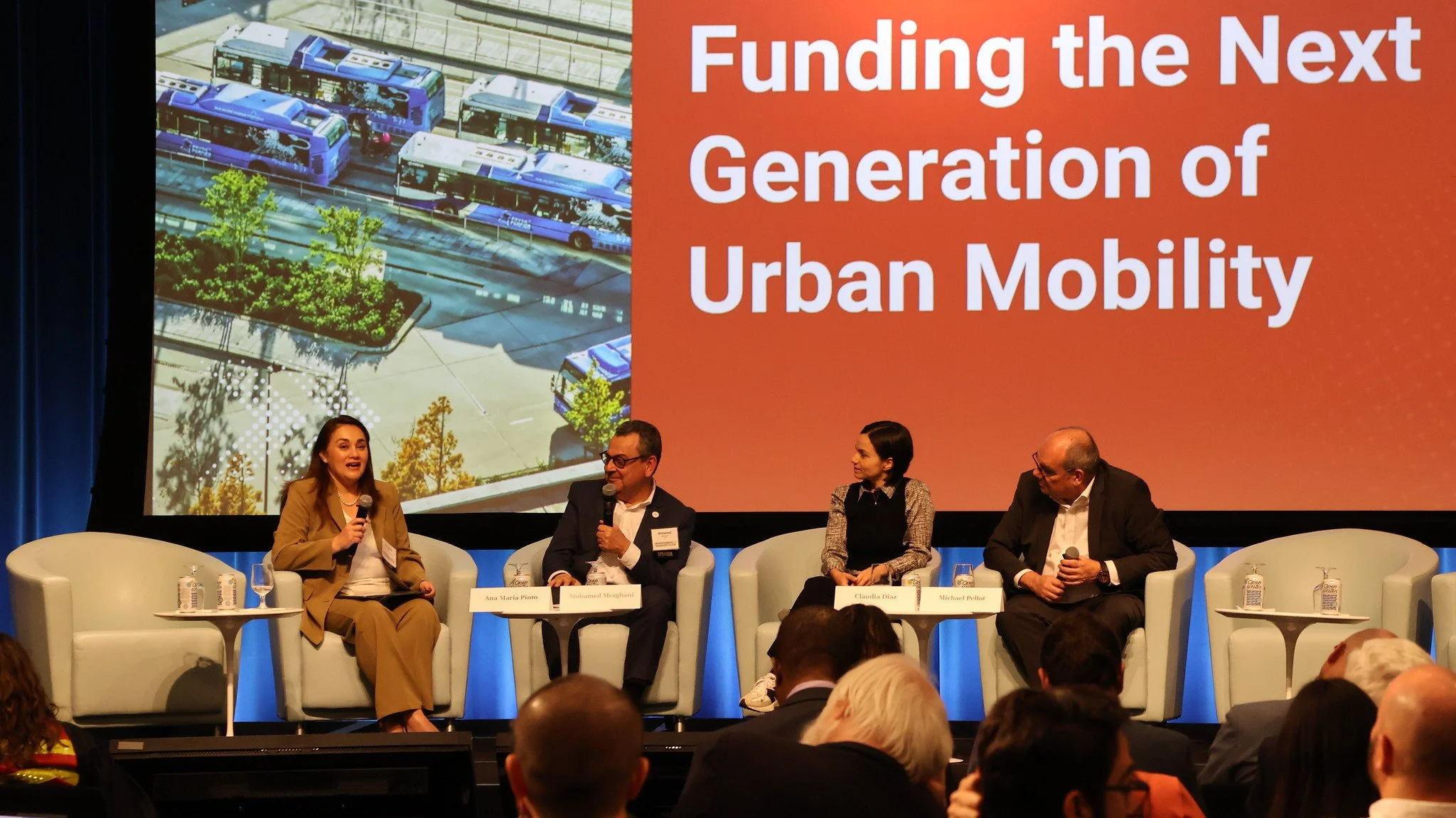
More than 5,000 participants from across the globe gathered in Washington, DC, and online for the 23rd edition of Transforming Transportation, bringing together government leaders, researchers, development institutions, and private sector representatives to explore how transport systems can create jobs, support inclusive growth, and expand opportunity in low- and middle-income countries.
Here’s what stood out:
Transport Drives Economic Growth — Across All Modes
Effective transport systems connect markets, get people to jobs and increase productivity — across public transit, freight, rail, ports, air and active mobility. Examples from this year's forum show just how significant that impact can be: Bogotá's Transmilenio BRT employs 35,000 people in a single city; Dakar's new BRT made 170,000 jobs accessible and raised the share of opportunities reachable within one hour to 60%; India's metro expansion — 1,000 kilometers under construction and 2,000 more in planning — is generating jobs now and will connect millions of workers to urban employment.
Transport also shapes the quality of that access. When networks expand, workers can reach more employers and employers can draw from wider talent pools, improving job matching, raising wages, and strengthening local economies. In many low- and middle-income countries (LMICs), walking is the primary mode of transport. In Addis Ababa, for example, 54% of all trips are made on foot. Yet pedestrian infrastructure remains chronically underfunded and unsafe, directly limiting how far people can travel for work and cutting off access to opportunity. Targeted investments in sidewalks, safe crossings and lighting are among the most cost-effective ways to close that gap, with immediate gains for the workers who depend on them most.
Corridors, Logistics and Regional Integration
Transport's economic impact extends well beyond cities. Investments in cross-border corridors and logistics networks connect countries and regions, enabling trade, improving food security and unlocking economic integration across LMICs.
Private sector leaders underscored this point, highlighting how logistics connectivity is a prerequisite for unlocking Africa's economic potential. Thinking about transport corridors as systems, rather than isolated projects, is key to maximizing their impact.
Mobilizing Private Capital
Public funding alone cannot deliver the transport systems LMICs need. Increasingly, the private sector is stepping in — bringing not just capital, but innovation, operational expertise and long-term commitment.
This year's forum reflected that shift, with private sector leaders from across the spectrum, from global infrastructure investors like Meridiam and corporate fleet electrification specialists like Element Fleet Management, to emerging mobility operators like ARC Ride in Kenya, each representing a different pathway for private engagement in transport across LMICs.
Blended finance, de-risking tools, guarantees, and land value capture are among the mechanisms making that engagement possible at scale. As digital platforms, smart traffic systems and electric mobility networks become more accessible, they further open the door for private sector solutions that are faster, cleaner and more efficient.
Road Safety
Unsafe roads carry a steep economic cost — in lost productivity, damaged supply chains and lives cut short. In many LMICs, road crashes represent an estimated 3% of GDP, a burden that far exceeds the cost of the infrastructure and policy interventions needed to address it. For transport systems to reliably connect people to jobs and opportunity, safety cannot be an afterthought.
People-Centered Mobility in Practice
Salvador, Brazil, received the 2026 Sustainable Transport Award, granted by the Institute for Transportation and Development Policy (ITDP), for its expanded electric BRT system. The project integrates clean transport, accessible design and a gender-inclusive workforce into a single, coherent initiative. Supported in part by the World Bank, the project stands as a compelling model of what sustainable, people-centered mobility can look like across LMICs: ambitious in vision, grounded in equity and replicable in its logic.
Innovation Within Reach
AI, digitalization and the rapid expansion of electric mobility are already reshaping how transport systems are planned, financed and operated. As these tools become increasingly accessible to LMICs, they open the door to transport solutions that are more efficient, more resilient and broader in reach. They give economies a genuine opportunity to leapfrog legacy systems and build for the long term, with significant implications for job creation, service delivery and inclusive growth.
Transforming Transportation brings together knowledge, experience and evidence from across sectors and geographies — informing action and accelerating progress toward more efficient, accessible, safe and resilient transport systems. #TTDC26 showed how transport is a foundation for thriving economies worldwide.
Stay connected and see you at #TTDC27.
Explore More: